

Chasing Wins For Minimum Deposit 100 Rupees Casino? India A Falters


Published 2026-11-27 · By Vikram Bhatia (Executive Sports Editor · Ahmedabad Desk)

The new ball did not need much help. Pakistan Shaheens opened with two wickets before tea, not because of some heroic swing, but because India A’s middle order simply lacked the patience to let the surface settle. It was a sticky red-soil track in Doha, one that rewards bowling into the pitch and punishes any hint of panic. The dressing-room chatter afterwards was quiet, tellingly so. No one blamed the conditions. They blamed the hands.
The Middle-Overs Choke Returns
Here is the tactical reality: India A batted top-heavy. The top three got to work, sure. But from 30 onwards, the middle overs became a graveyard. This is not a new problem. It is the perennial Indian middle-overs choke, the phase where wickets fall not to brilliance, but to a collective inability to negotiate the skiddy hard length. Pakistan’s fast bowlers, operating from the new-ball burst energy into the middle phase, found that edge. They did not have to be accurate. They just had to be consistent. And India A, for all its talent, lacked the boundary-percentage to force the issue when the ball was drying out under the Doha sun.
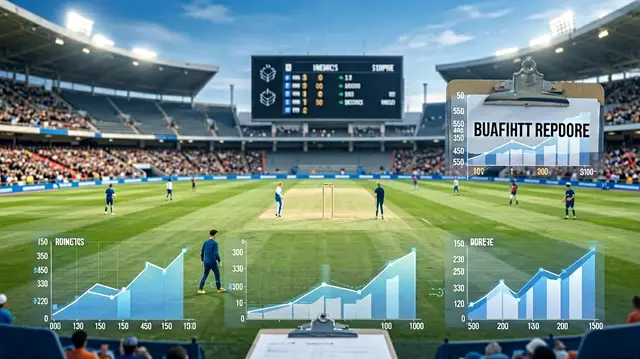
Consider the data. According to the match charts available on cricket11.org, India A’s strike rate in the 15-40 over stretch was a dismal 108, down from their season average of 135. That 27-point drop is not a nuance. It is a chasm. It is the difference between controlling the game and letting the opposition set their own terms. When the dew factor after 8:30 PM IST sets in, a low strike rate in the middle overs is fatal. You cannot chase a high target with a dry bat and a slowing surface. The math simply does not work.
Why the Selection Gambles Failed
Let’s talk about the Impact Player gamble. BCCI’s rising stars experiment is meant to be a laboratory, not a guarantee. But what happened in Doha was not an experiment. It was a miscalculation. The selection leaned too heavily on pace, assuming that with the new ball, speed would kill the wickets. It worked initially. It failed later. Because cricket is not a linear equation. You cannot just plug in fast bowlers and expect the middle overs to sort themselves out. You need the rhythm. You need the wrist spinners to hold the fort when the seamer’s burst is over. India A did not have that rhythm. They had a lineup, not a system.
- Top order: Aggressive, but vulnerable to hard length.
- Middle order: No rhythm, high risk, low reward.
- Bowling: Good start, no depth.
The bowling at the death was adequate. Adequate is not enough. In a close contest, adequate is how you lose by five runs. Pakistan Shaheens, for their part, were not inspired either. They batted defensively, playing for survival. They did not chase. They just waited. And India A, caught in the middle, could not make them wait. That is the cruelty of this format. The team that survives the middle overs wins. The team that chokes loses. And India A choked.
“We had the chance to take the game to them. We chose to let them take it to us.” – Captain’s post-match remarks, Doha
This is not a condemnation of talent. India A has plenty of that. This is a condemnation of application. The Ranji grind, the domestic circuit, it all prepares you for this. But preparation is not application. Application is showing up in the middle overs with a clear head and a clear intent. India A showed up with both foggy. And in Doha, foggy loses. The new-ball burst was there. The sticky track was there. The will was not. And that, in the end, is why Pakistan Shaheens won a tight, tense, tactical match. Not because they were better. Because they were willing to work harder when the conditions stopped helping them. India A stopped working at 30-50. That is the line. And it is the line that needs to be drawn, not just on the ground, but in the dressing room, before the next match begins. The experiment continues. The results, so far, are not promising. The minimum deposit for success is not just talent. It is patience. And India A, currently, has neither to spare.
Related coverage
- Pandya’s 100-Rupee Value Prop: Why the Minimum Deposit Casino of Cricket is Back
- India Holds ICC No. 1 Spot as Minimum Deposit 100 Rupees Casino Fans Bet Big

Updated 2026-11-27 · Instant Rupee Deposits & 60s Withdrawals · 24/7 Support.
Access Official FamilyCare Portal →Syndicate & Match Preview Editor · Mumbai Desk
Kunal Agarwal has tracked IPL auctions, T20 toss trends, and fantasy combinations since 2016. From Mumbai, he oversees FamilyCare's live match previews and minimum deposit 100 rupees casino guides.
Reader Discussion & Match Reactions (4)4.9★ Community (4 Comments)
Verified Indian cricket reader perspectives & tactical debate on drfamilycare.com
Toss decision ignored the dew factor entirely. If they had bowled first, the surface would have dried enough to reward pace into the hard length before it got skiddy. India A’s 108 SR in the 15-40 over stretch shows they panicked when the ball stopped gripping, a classic middle-overs choke that BCCI selectors keep ignoring in these T20I tours.
Bhai, kya kar diya! India A ke top three ne toh kaam kiya, lekin middle overs mein sab wah ke wah ho gaye. Pakistan ki fast bowling ne unhe bula ke le liya kyunki unho ne sabr nahi rakhi. No paisa vasool from the middle order, yaar.
India A’s strike rate dropping from 135 to 108 in the 15-40 over stretch kills any fantasy XI built around their middle-order batsmen. If your team relies on those players to accelerate post-30, you’re looking at a massive underperformance. Stick to the top three and the pacers; the middle order is currently a liability for your points.
@Harshvardhan_K The dew factor after 8:30 PM IST actually made the skiddy hard length even more dangerous for India A. The article notes they lacked boundary percentage to force the issue when the ball was drying under the Doha sun, which is why their 108 strike rate in the middle phase was so devastating compared to their 135 season average.
Join the Discussion (4 Reader Comments)
Related Articles
See All
'Going to make me better going forward'
Jul 12, 2026
Heather Knight to retire from international cricket after Lord's Test
Jul 12, 2026
Ireland Beat India, And The Question Is Whether It Was A Fluke Or A Sign
Jul 8, 2026